
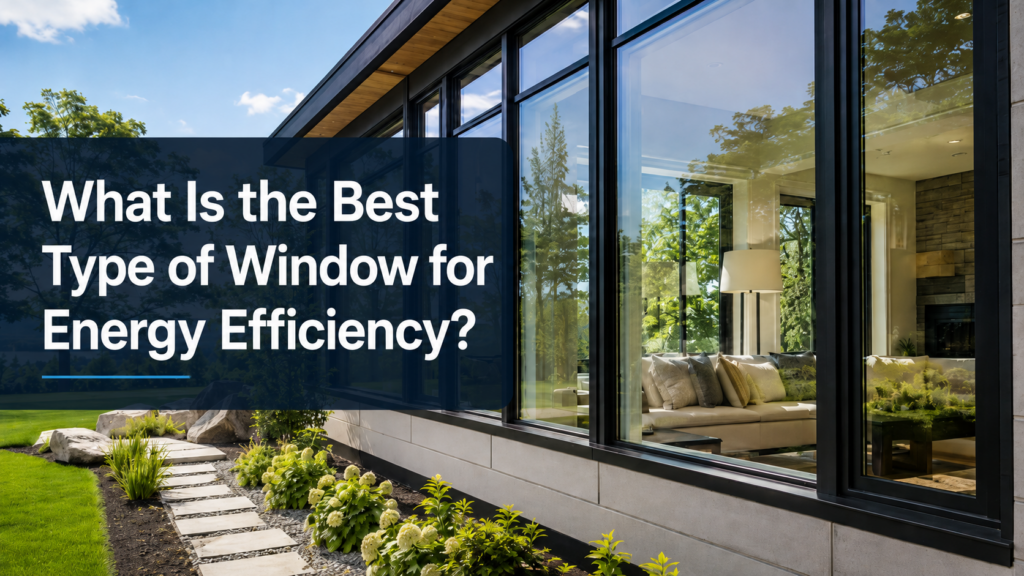
The most energy-efficient window isn’t a single product — it’s a combination of an insulating frame (vinyl or fiberglass), multiple panes of glass, a Low-E coating, an inert gas fill, and performance ratings matched to your climate. Get those elements right and a window can cut heating and cooling costs by up to 13%, according to ENERGY STAR, while keeping your home noticeably more comfortable year-round.
For most homeowners, the question isn’t just “vinyl or wood?” — it’s how the frame, glass, and ratings work together. Understanding the most energy efficient window types means looking at the whole package, then matching it to where you live. In hot-climate regions like Southern California, that means prioritizing windows that keep solar heat out, not in.
At Newman Windows and Doors, we’ve installed over 600,000 windows across San Diego and Orange County in the past 30 years, so we’ve seen firsthand which combinations actually move the needle on energy bills. Here’s how to identify the best energy-efficient window for your home — and what to ignore in the marketing.
The Most Energy-Efficient Window Combines Four Things, Not One

A truly energy-efficient window depends on four components working together — no single feature does the job alone. A premium frame with cheap glass underperforms, and high-end glass in a leaky frame leaks energy regardless of its rating.
Here are the four elements that determine a window’s efficiency:
- Frame material — how well the frame itself resists heat transfer.
- Glass package — the number of panes and the air or gas sealed between them.
- Low-E coatings — microscopic layers that reflect heat and block UV rays.
- Performance ratings — the U-factor and SHGC numbers that tell you how the window actually performs.
When you evaluate a window, look at all four together. The sections below break down each one so you can spot the difference between a window that’s genuinely efficient and one that just looks the part.
Vinyl and Fiberglass Frames Lead the Pack for Energy Efficiency
Vinyl and fiberglass are the most energy-efficient frame materials because they naturally resist heat transfer far better than metal. Aluminum, by contrast, conducts heat readily, which can undercut the performance of even high-quality glass. The right frame choice depends on your budget, your home’s style, and your climate.
Here’s how the four main frame materials compare for energy efficiency:
| Frame Material | Energy Efficiency | Maintenance | Best For |
|---|---|---|---|
| Vinyl | Excellent — strong insulator, great value | Very low | Most homeowners wanting efficiency on a budget |
| Fiberglass | Excellent — stable and durable | Low | Coastal homes and long-term performance |
| Wood | Good — natural insulator, but needs upkeep | High | Historic or design-driven homes |
| Aluminum | Lower — conducts heat unless thermally broken | Low | Modern, slim-profile aesthetics |
For the majority of Southern California homes, vinyl offers the best balance of efficiency, durability, and affordability — which is why brands like Milgard and Win-Dor dominate the replacement market here. Fiberglass is an excellent step up for homeowners near the coast who want maximum stability against salt air and sun.
Are Double-Pane or Triple-Pane Windows Better?
Double-pane windows are the efficiency standard for most homes, while triple-pane offers extra insulation that pays off most in extreme climates. The space between the panes is just as important as the number of panes, because that’s where the real insulation happens.
Here’s what separates a basic window from a high-performance one:
- Two panes minimum. Single-pane windows are essentially uninsulated — replacing them delivers the biggest efficiency jump of any upgrade.
- Inert gas fills. Argon or krypton gas sealed between the panes insulates far better than plain air, slowing heat transfer.
- Warm-edge spacers. These reduce heat loss around the edges of the glass and help prevent condensation.
- Triple-pane for extremes. A third pane adds insulation and sound dampening, but the added cost makes the most sense in very hot or very cold zones.
In Southern California’s mild-to-hot climate, a quality double-pane window with the right Low-E coating and an argon fill delivers excellent efficiency for most homes. Triple-pane is worth considering for inland and desert areas, or where noise reduction is a priority.
U-Factor and SHGC Are the Two Numbers That Matter Most
U-factor and Solar Heat Gain Coefficient (SHGC) are the two ratings that determine how energy-efficient a window truly is — everything else is secondary. You’ll find both on the NFRC label affixed to every certified window, and learning to read them protects you from marketing hype.
Here’s what each number means:
- U-factor measures how well the window insulates. The lower the number, the better — a U-factor of 0.30 or below is considered efficient, and 0.20 or lower usually indicates triple-pane glass.
- SHGC measures how much solar heat passes through the glass, on a scale from 0 to 1. The lower the number, the less heat enters — which is exactly what hot climates want.
- The ENERGY STAR label confirms a window meets U-factor and SHGC targets for its climate zone. Only the actual ENERGY STAR logo plus the NFRC label confirms certification — “energy-efficient-style” marketing language does not.
For most of California, which sits in ENERGY STAR’s southern climate zones, the priority is a low U-factor paired with a low SHGC — typically a U-factor around 0.30 or below and an SHGC near 0.23–0.25. These targets also align with California’s Title 24 energy standards, keeping your home compliant during renovations and attractive to future buyers.
Which Window Styles Are the Most Energy Efficient?
Fixed and casement windows are the most energy-efficient styles because they seal the tightest, while sliding and single-hung windows allow slightly more air leakage. The way a window opens directly affects how well it keeps conditioned air inside.
Ranked roughly from most to least airtight:
- Picture (fixed) windows — they don’t open, so there’s no operable seal to leak. The most airtight option.
- Casement windows — they crank shut against a gasket, creating a tight seal that improves with wind pressure.
- Awning windows — similar tight seal to casements, with the added benefit of ventilation during light rain.
- Double- and single-hung windows — popular and versatile, with a small amount of air movement at the sash.
- Sliding windows — easy to operate, with slightly higher air leakage at the track.
Style isn’t the only factor — a well-built slider with strong ratings can outperform a poorly made casement. But when efficiency is the top priority, casement and picture windows give you a head start. The best approach is to match the style to each room’s function and let the ratings guide the final decision.
The Right Energy-Efficient Window Is the One Matched to Your Climate
The single most important rule of window efficiency is to match the window to your climate, because the “best” window in Minnesota is not the best window in California. In a cooling-dominated climate, the goal is to reject solar heat — so the ideal window combines an insulating vinyl or fiberglass frame, double-pane glass with a heat-reflecting Low-E coating, an argon fill, and a low SHGC.
At Newman Windows and Doors, we help homeowners choose from gold-standard brands like Milgard, Win-Dor, AMSCO, Simonton, and Therma-Tru, and every installation is handled by our in-house, InstallationMasters™ Certified team — never subcontractors. Because even the most efficient window only performs as well as its installation, we back our work with a Lifetime Installation Guarantee that protects your investment for as long as you own the home.
Frequently Asked Questions About Energy-Efficient Windows
What is the most energy-efficient type of window?
The most energy-efficient window combines a vinyl or fiberglass frame, double- or triple-pane glass, a Low-E coating, and an argon or krypton gas fill, with a low U-factor and a climate-appropriate SHGC. For hot climates like California, a low SHGC matters most because it blocks unwanted solar heat.
Are vinyl windows more energy efficient than aluminum?
Yes. Vinyl frames insulate far better than standard aluminum because aluminum conducts heat readily. Unless an aluminum frame is “thermally broken,” it can transfer outdoor temperatures indoors and reduce the overall efficiency of the window, even with quality glass.
Is triple-pane glass worth it in California?
For most California homes, a high-quality double-pane window with Low-E glass and an argon fill provides excellent efficiency. Triple-pane is worth considering in hot inland and desert areas or where strong noise reduction is a priority, but it carries a higher cost that may not pay back in milder coastal zones.
What U-factor and SHGC should I look for in California?
In California’s southern climate zones, look for a U-factor around 0.30 or lower and an SHGC near 0.23 to 0.25. The low SHGC keeps solar heat out, while the low U-factor improves insulation — a combination that also supports compliance with California’s Title 24 energy standards.
Do energy-efficient windows really lower energy bills?
Yes. ENERGY STAR certified windows can reduce heating and cooling costs by an average of up to 13% compared to non-certified products. The savings are often higher in California, where high electricity rates and long cooling seasons make efficient windows pay off faster.
Choosing the Best Window for Your Home
The best type of window for energy efficiency is the one that pairs an insulating frame, a smart glass package, and the right ratings for your climate — and in California, that means prioritizing low solar heat gain above all. Get the combination right and you’ll enjoy lower bills, steadier indoor temperatures, and a home that’s more comfortable in every season.
If you’d like help matching the right energy-efficient windows to your home and climate zone, the team at Newman Windows and Doors offers free, no-pressure consultations at our showrooms in San Diego, Carlsbad, Orange, Mission Viejo, and Brea. With 30 years of experience and 75,000+ Southern California homes served, we’ll help you find windows that perform as good as they look.