
Window material is one of the most consequential decisions in any replacement project — and also one of the most misunderstood. Cost, durability, energy performance, maintenance demands, and aesthetics vary significantly across the three most common frame materials. This guide to vinyl vs. fiberglass vs. wood windows compared gives you a straight, side-by-side breakdown of how each material performs so you can make the right call for your home, your budget, and the Southern California climate. At Newman Windows and Doors, we install all three materials across San Diego and Orange County, and we’ve seen firsthand what holds up — and what doesn’t.
Window Material Determines Long-Term Value, Not Just Upfront Cost
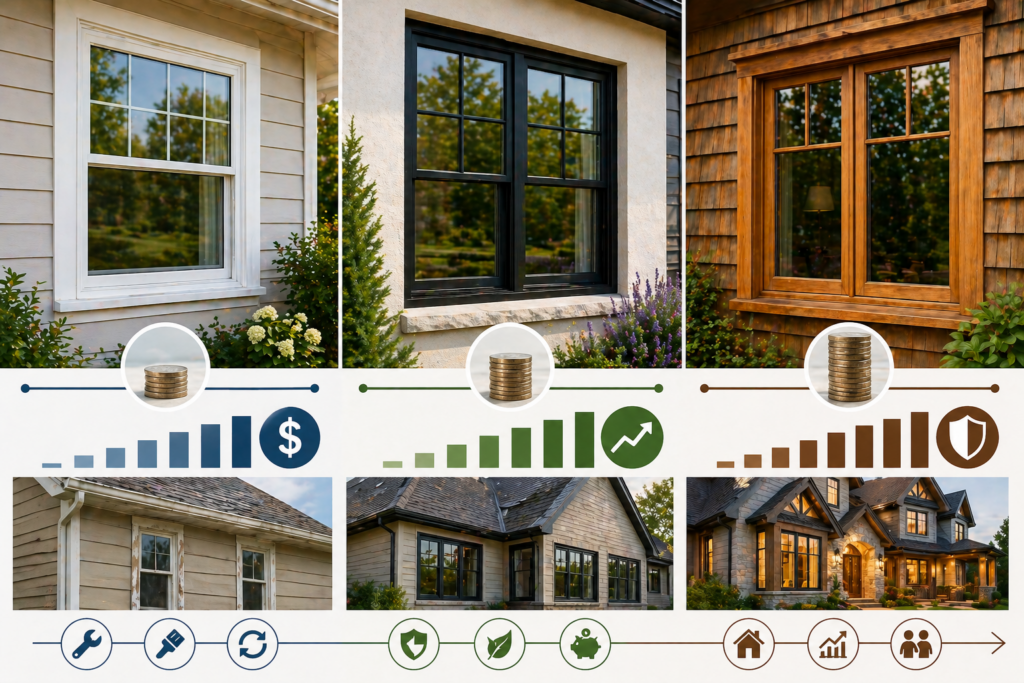
Most homeowners start the conversation with price. That’s reasonable — but the least expensive window frame at the point of purchase isn’t always the most cost-effective choice over 20 or 30 years. Each material carries its own maintenance requirements, replacement timeline, and performance profile. A better framing question is: which material delivers the best value for my specific home, climate, and goals?
Here’s what you’re actually comparing across the three materials:
- Upfront cost — materials and installation pricing per window
- Energy efficiency — thermal resistance and impact on utility bills
- Durability and lifespan — how long the frame holds up without replacement
- Maintenance requirements — what ongoing care is needed to preserve performance
- Aesthetic flexibility — color options, interior finish, architectural compatibility
- Performance in the Southern California climate — UV exposure, coastal salt air, heat
Vinyl Windows Offer the Best Value for Most Southern California Homeowners
Vinyl is the most popular window frame material in the United States, and for good reason. It delivers solid thermal performance, requires virtually no maintenance, and comes in at a price point accessible to most homeowners undertaking a full replacement project.
What vinyl does well:
- Low maintenance: Vinyl frames never need to be painted, stained, or sealed. A periodic cleaning with soap and water keeps them looking new.
- Strong energy efficiency: Multi-chamber vinyl frames trap air effectively, providing good insulation for San Diego and Orange County homes. When paired with dual-pane Low-E glass, vinyl windows perform well against heat gain.
- Affordability: Vinyl is the most budget-friendly of the three materials, making it the practical choice for larger projects where replacing 15–25 windows at once.
- Moisture resistance: Vinyl doesn’t absorb water, rot, or corrode — a meaningful advantage in coastal neighborhoods from La Jolla to Dana Point.
Where vinyl has limits:
- Standard vinyl cannot be painted — the color is factory-applied, so changing your exterior palette later means replacing the windows or living with the original color.
- Vinyl expands and contracts with temperature fluctuations more than fiberglass does. In most of Southern California this is minor, but it can affect seal integrity over time in extreme-heat microclimates.
- Vinyl frames are wider than fiberglass, which can slightly reduce the visible glass area compared to a slimmer fiberglass profile.
Fiberglass Windows Deliver Superior Strength, Stability, and Longevity
Fiberglass is the premium choice in window frame materials, and it earns that status through measurable performance advantages over both vinyl and wood. For homeowners focused on long-term value — particularly in coastal San Diego or high-UV inland areas — fiberglass is consistently the top recommendation from our team at Newman Windows and Doors.
What fiberglass does exceptionally well:
- Dimensional stability: Fiberglass expands and contracts at nearly the same rate as the glass it holds. This means the seal between frame and glass stays tighter over decades, reducing the risk of air and moisture infiltration.
- Structural strength: Fiberglass frames are significantly stronger than vinyl, allowing for thinner profiles, larger glass areas, and slimmer sightlines — ideal for homes with ocean or canyon views where maximizing the view matters.
- Lifespan: Fiberglass windows routinely last 30–50 years or more with minimal upkeep. For homeowners planning to stay in their home long-term, the math often favors fiberglass even at a higher upfront cost.
- Paintability: Unlike vinyl, fiberglass can be painted with exterior-grade paint. This gives you flexibility to update your home’s color scheme years down the road without replacing the windows.
- Coastal durability: Fiberglass is highly resistant to salt air corrosion and UV degradation — two of the most punishing forces for window frames in Southern California coastal communities.
The tradeoff with fiberglass:
- Fiberglass windows cost more upfront — typically 20–30% more than comparable vinyl options. For a whole-home replacement, that gap is meaningful at the point of purchase.
- Availability of styles and colors is broader with vinyl, though fiberglass selection has expanded considerably in recent years.
Wood Windows Provide Unmatched Aesthetics but Demand the Most Maintenance
Wood windows carry a warmth and architectural authenticity that no manufactured material fully replicates. For certain home styles — craftsman bungalows, Tudors, traditional Colonials, and historic properties — wood is the only material that fits the character of the home correctly.
What wood does well:
- Aesthetics: Wood grain, natural color variation, and interior finish options give wood windows an organic quality that resonates with both homeowners and buyers. They photograph well and add perceived value in premium home markets.
- Thermal insulation: Wood is a natural insulator and performs well thermally without requiring multi-chamber frame engineering.
- Customization: Wood frames can be stained, painted, and refinished in virtually any color or finish — interior and exterior — at any point in their life.
- Architectural compatibility: Many HOAs and historic district guidelines explicitly require or recommend wood windows for exterior consistency. If your neighborhood falls into this category, wood may not be optional.
Where wood requires commitment:
- Wood must be painted or sealed regularly — typically every 3–5 years on the exterior — to prevent moisture absorption, swelling, and rot. In coastal areas with salt air and humidity, this cycle can be more frequent.
- Wood windows are the most expensive of the three materials, both in product cost and long-term maintenance expense.
- Neglected wood frames can deteriorate faster than vinyl or fiberglass, requiring earlier replacement if maintenance lapses.
How Do Vinyl, Fiberglass, and Wood Windows Compare Side by Side?
| Category | Vinyl | Fiberglass | Wood |
|---|---|---|---|
| Upfront Cost | $ Low–Moderate | $$ Moderate–High | $$$ High |
| Lifespan | 20–40 years | 30–50+ years | 30–50 years (with upkeep) |
| Maintenance | Very low | Very low | High (paint/seal every 3–5 yrs) |
| Energy Efficiency | Good | Excellent | Good |
| Dimensional Stability | Moderate | Excellent | Lower (prone to swelling) |
| Coastal/UV Resistance | Good | Excellent | Moderate (requires sealing) |
| Paintable | No | Yes | Yes |
| Best For | Value-focused whole-home replacements | Long-term investment, coastal, view homes | Historic, craftsman, premium aesthetics |
Which Window Material Is the Right Fit for San Diego and Orange County Homes?
Southern California’s climate is mild compared to most of the country — but it presents its own specific challenges for window frames: intense UV exposure, coastal salt air, wildfire smoke in some inland areas, and significant variation between coastal and inland microclimates. Here’s how to think about the choice for your specific situation:
- Coastal properties (La Jolla, Encinitas, Newport Beach, Dana Point): Fiberglass is the clear first choice. Salt air is relentless on wood finishes and can degrade standard vinyl formulations over time. Fiberglass resists both without any additional maintenance.
- Inland homes (Escondido, El Cajon, Irvine, Anaheim Hills): Vinyl performs very well here and offers excellent value. The lower humidity and reduced salt exposure play to vinyl’s strengths.
- View homes and modern architecture: Fiberglass’s slimmer sightlines maximize glass area — ideal where the view is the point of the window.
- Historic or craftsman homes: Wood remains the gold standard for architectural authenticity and HOA compliance in period-appropriate neighborhoods.
- Whole-home replacements on a defined budget: Quality vinyl delivers the best cost-per-window value and still qualifies for energy efficiency rebates through Southern California utilities.
In our experience across thousands of projects in San Diego and Orange County, fiberglass is the most frequently recommended material when homeowners are prioritizing long-term performance and aren’t constrained by budget. Vinyl is the right call when value, low maintenance, and practical performance matter most — which describes the majority of replacement projects we complete.
Frequently Asked Questions: Vinyl, Fiberglass, and Wood Windows
Which window material lasts the longest?
Fiberglass windows have the longest lifespan of the three — typically 30–50 years or more with minimal maintenance. Vinyl windows last 20–40 years, while wood windows can match that range but only with consistent upkeep to prevent moisture damage and rot.
Are fiberglass windows worth the extra cost?
For most homeowners prioritizing long-term value, yes. Fiberglass outperforms vinyl and wood in thermal stability, structural strength, and longevity — which means lower lifetime costs even if the initial price is higher. The gap tends to close significantly when you factor in the maintenance costs wood requires over the same period.
What is the best window material for coastal homes in San Diego?
Fiberglass is the top choice for coastal properties. It resists salt air corrosion, UV degradation, and moisture far better than wood or standard vinyl. For budget-conscious coastal homeowners, premium UV-stabilized vinyl is a solid second option.
Do vinyl windows look cheap compared to wood?
Modern vinyl windows have improved significantly in appearance. Many feature woodgrain interior finishes and a wider color palette than older products. That said, wood still offers a warmth and authenticity that vinyl cannot fully replicate — especially for craftsman, Tudor, or traditional architectural styles where the interior character of the frame is visible and important.
Can I paint vinyl or fiberglass windows?
Fiberglass windows can be painted with exterior-grade paint, giving you flexibility to update your home’s color scheme in the future. Standard vinyl windows are not designed to be painted — the color is factory-applied, and repainting without adhesion issues is not reliable. If exterior color flexibility matters to you, fiberglass or wood is the better choice.
Newman Windows and Doors helps homeowners across San Diego and Orange County select the right window material for their home, climate, and budget. Give us a call at 888-744-7893 or visit newmanwindows.com to schedule your free consultation — and get a recommendation you can trust from a team that installs all three materials every day.